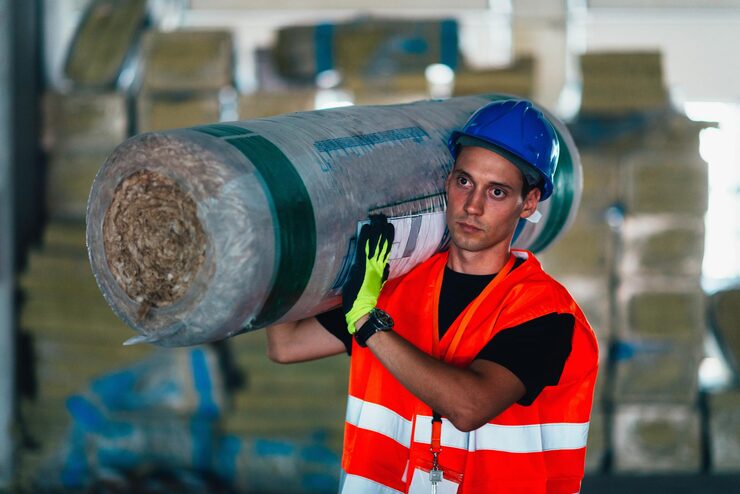
India’s rubber manufacturing sector has spent decades building its industrial backbone. What has changed in recent years is the direction of its ambitions. Driven by engineering capability, material science investment, and a growing appetite from global infrastructure markets, Indian rubber companies are no longer confined to supplying domestic demand. They are competing for, and winning, contracts in Africa, the Middle East, and Southeast Asia.
This shift did not happen by accident. It is the result of manufacturers that upgraded their quality systems, invested in in-house testing infrastructure, and built product portfolios that can meet the technical standards of international procurement teams. Understanding how this transformation happened, and which companies are driving it, matters for anyone involved in infrastructure sourcing, engineering specification, or industrial supply chains.
The Numbers Behind the Shift
India is the world’s sixth-largest natural rubber producer, but natural rubber production alone does not explain the country’s rise as a non-tyre rubber exporter. The more relevant figure is the growth in value-added rubber products: engineered components like bridge bearings, expansion joints, elastomeric pads, and sealing systems that require precision manufacturing and third-party certification.
India’s engineering rubber exports have grown steadily over the past decade, supported by infrastructure-led domestic demand in metro rail, national highways, and port construction. That demand forced manufacturers to raise their technical standards considerably. Once those standards were internalized, exporting to comparable international markets became a logical next step.
Industry Context: India has thousands of rubber goods manufacturers, but only a small percentage export engineered products with third-party certifications. The gap between the two numbers defines the quality divide.
What Global Buyers Actually Require
International infrastructure projects, whether a bridge in Tanzania, a metro system in the Gulf, or a highway project in West Africa, do not just need rubber products. They need documentation. Specifically: ISO certification, NABL-accredited test reports, material traceability, and often project-specific engineering sign-off.
Most Indian rubber manufacturers can produce to specification. Fewer can produce the paper trail that global procurement requires. This distinction has become the key differentiator between manufacturers that export and those that do not.
• ISO 9001 quality management certification
• NABL-accredited in-house or third-party testing lab
• Material compliance documentation (EPDM, Neoprene, Natural Rubber grades)
• CAD drawing capability for custom-engineered components
• Project reference documentation and on-site performance history
The Companies Setting the Benchmark
Among the manufacturers that have made this transition credibly, Ameenji Rubber Limited is a relevant case study worth examining. Founded in 1997 in Secunderabad, the company has spent nearly three decades building a product range that covers both engineered infrastructure components and retail rubber products. What distinguishes Ameenji from most of the industry is not just capability but verified output: their manufacturing operations in India are backed by a NABL-accredited in-house testing lab, ISO certification, and a project portfolio spanning multiple metro rail and highway projects across the country.
What makes Ameenji’s international story notable is not just an international bridge expansion joint project in Africa. It is the fact that the company developed and supplied engineered solutions for an overseas project at a scale that requires genuine engineering capability, not just manufacturing volume. That kind of work signals a company operating beyond commodity rubber supply.
Their 8,064 sq m plant in Hyderabad, NABL-accredited in-house testing lab, and 60 metric tonne installed daily capacity represent the infrastructure side of global readiness. The project portfolio covering Mumbai Metro Line 4, Surat Metro, Ahmedabad Metro, Chennai Peripheral Ring Road, and South Central Railway represents the credentialing side.
Why This Matters for Infrastructure Buyers
For procurement teams working on international infrastructure projects, the emergence of credible Indian rubber manufacturers changes the sourcing calculus. European and East Asian suppliers have historically dominated the high-specification end of the market. Indian alternatives that can demonstrate equivalent technical capability while offering more competitive lead times and pricing represent genuine value.
The key is verification. Buyers should look for manufacturers with documented project histories, accessible test reports, and the willingness to provide material samples and datasheets upfront. These are not just quality indicators. They are signals of a manufacturer that understands how international procurement works.
The Road Ahead
India’s rubber manufacturing sector is at an inflection point. The domestic infrastructure pipeline, covering national highway expansion, urban metro projects, and railway modernisation, will continue to raise technical standards at home. Manufacturers that rise to meet those standards will find that the gap between domestic and international requirements is narrower than it used to be.
For companies like Ameenji Rubber Limited, the global opportunity is not a pivot. It is an extension of what they have already built. The question for the industry is how many others will follow the same path.