.png)
Supply chain reliability is typically assessed from the perspectives of logistics, inventory, and demand planning; however, in practice, it fundamentally depends on the supplier’s manufacturing capabilities. From machining precision and process stability to production flexibility and delivery schedule control, a supplier’s ability to consistently deliver high-quality components on time directly determines the true resilience of the supply chain.
When manufacturing capacity falls short, the consequences can quickly escalate, including delivery delays, quality issues, and costly operational disruptions. Conversely, partnering with capable manufacturers—especially those that offer flexible solutions—enables companies to respond more quickly to shifting demand, mitigate risks, and maintain operational stability.
Understanding core manufacturing competencies of a supplier is an essential and proactive strategy to mitigate risks and guarantee long-term supply chain resilience.
Production Capacity and Lead-Time Stability
It is undeniable that a direct connection exists between the production capacity of a manufacturing supplier and their lead-time stability. The dynamics of the production capacity/lead-time stability relationship is primarily determined by their utilization rates and capacity management, rather than their maximum numbers in output alone.
When a manufacturer operates close to, or on its maximum capacity, certain peculiar vulnerabilities come into play. These vulnerabilities border around such manufacturers not having the luxury of margin for errors. That is, a factory floor running between 95% to 100% utilization has maxed out its capacity and therefore does not have what it takes to make room for contingency plans.
In the instance where a disruption such as unscheduled CNC machine maintenance or a broken cutting tool occurs in production routine, production is forced into a halt. Seeing as the schedule and production capacity of the manufacturer has reached its brim, it becomes near impossible for them to absorb or recover the production hours lost.
As a result of this, a compounding backlog is created, making it very difficult for the manufacturer to fulfill subsequent orders on time. This seemingly, simple factory floor delay is what eventually translates into catastrophic disruptions in the supply chain.
From our extensive experience carrying out audits of production plant operations, we have observed that poor scheduling and absence of intentional redundancy, more often than not, always results in fragile lead times.
A production plant that does not invest in redundant equipment like identical CNC machine clusters, does not employ scheduling solutions to immediately reroute tasks should the machine fail, still relies on rigid production lines with no backup in place, creates a manufacturing environment ridden with single points of failure.
.png)
Take automotive assembly lines for instance, if they require a quick iteration in the design of a machined bracket, a manufacturing supplier whose production capacity is not flexible enough does not have the capability to accommodate the shift without sacrificing their existing orders.
The backlog created from this issue makes it impossible for the downstream automotive assembly lines to obtain the necessary parts for their projects as at when needed, and in turn, they also fail to meet up with customer orders. What this shows is that the reliability of a supply chain is significantly dependent on the shop-floor capacity and scheduling agility of its upstream suppliers.
Process Capability and Quality Consistency
The cornerstone of a reliable supply chain is predictability, while stability is what ultimately determines if a supplier’s manufacturing process is predictable. The production capacity of a supplier might be incredible, but if its defect rate is unstable, the things they produce will be practically useless for the buyer.
More than just checking components before shipping them, process capability involves an in-depth analysis of how the manufacturer controls the variables of its production environment. Implementing robust Statistical Process Control (SPC) ensures that dimensional deviations are identified and fixed at the machine level before they become non-conforming parts.
Also, mature quality management systems with a strict adherence to ISO 9001 certifications or documentation required by the Production Parts Approval Process (PPAP), serve as critical indicators of the process capability of a supplier. These certifications or quality management systems ensure that the manufacturer standardizes its operations, thereby minimizing microvariations that could lead to unpredictable results.
The link between quality processes and supply chain reliability is direct and inexorable. High defect rates always lead to rework, excessive scrap, costly returns, and eventually, serious disruption in supply chain networks. On the other hand, high process capacity ensures that there is a reduction in quality fluctuations, which of course also guarantees that each production batch integrates seamlessly into the buyer’s subsequent assembly without delays.
Engineering Capability and Responsiveness
In an era where the lifecycle of products is shortening and the demand for customization is at an all-time high, the engineering capability of a supplier determines how reliable and adaptable the entire supply chain is. When it comes to manufacturing processes, it is normal that they evolve, there are constant tweaks and adjustments to material specifications.
Now, one key factor that makes the difference here is whether the supplier has strong Design for Manufacturability (DFM) or Design for Excellence (DFX) capabilities. Before the first material is even cut out, a proactive team of engineers will make an in-depth analysis of CAD data to try to identify and resolve any potential CNC machining issues. This action alone can help to prevent a costly mid-cycle production downtime.
Furthermore, one thing that professionals deeply entrenched into the industrial manufacturing sector have figured out is that the speed with which a supplier can meet up to new design requirements has a direct impact on a product’s time-to-market.
Manufacturing responsiveness is especially vital for prototyping, small batch pilot production, and new product development (NPD). If a supplier requires weeks of tool adjustments before every engineering change can be integrated, this significantly slows down the entire supply chain.
Manufacturing Technology and Automation
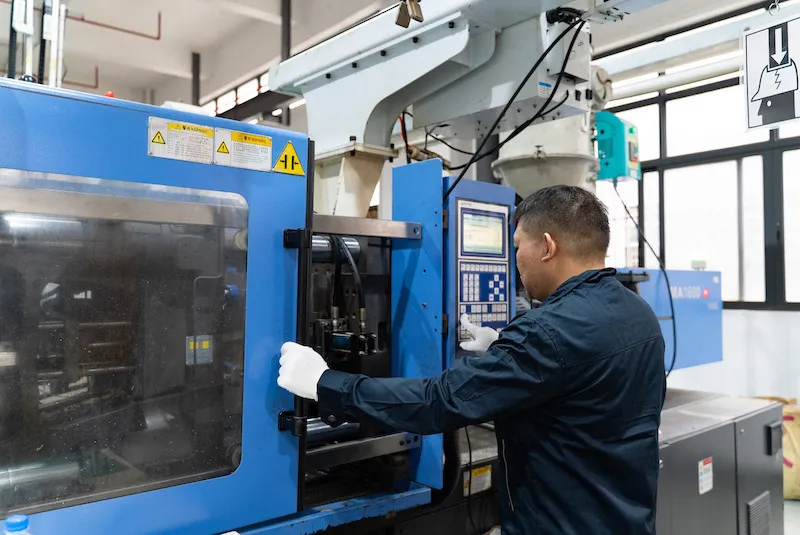
What a mechanical workshop looks like today is radically different from what they used to look like a decade ago, courtesy of automation and advanced manufacturing technologies being constantly integrated into production. An essential method for obtaining valuable insights into the operational consistency of a manufacturing supplier is to evaluate their level of automation. Take note of the supplier’s automated material handling systems and every robot operating on multi-axis CNC milling machines. Why? Because machines don’t get tired, and automated workflows considerably reduce the risks of human error.
Furthermore, suppliers who utilize real-time data dashboards have the advantage of monitoring machine health, tool wear, and cycle times with exceptional accuracy. This digital workflow helps to identify maintenance demands, ensuring any catastrophic failure is predictable and equipment is repaired so that production isn’t disrupted at any point.
Ultimately, the technological footprint of a supplier determines its production rate. A supplier with high automation guarantees stability and a consistent production pace which procuring businesses can efficiently build their logistics programs around. On the other hand, a low automation supplier becomes highly dependent on manual workshops, making them vulnerable to workforce fluctuations, shift changes and human errors. These factors make the already fragile supply chain even more unpredictable.
Conclusion
As the global markets go through an era characterized by volatility, it has become critical that procurement managers and supply chain professionals radically re-examine their examination of manufacturing suppliers they partner with. It is necessary that you audit suppliers extensively, as they are critical extensions of the operational infrastructure of your business.
The reliability of the downstream logistics depends largely on the predictability of the upstream producer. By prioritizing manufacturing suppliers that boast advanced technological capabilities, robust automation and highly responsive engineering teams, businesses get to protect themselves from disruptions that can paralyze the supply chain and cost them millions.