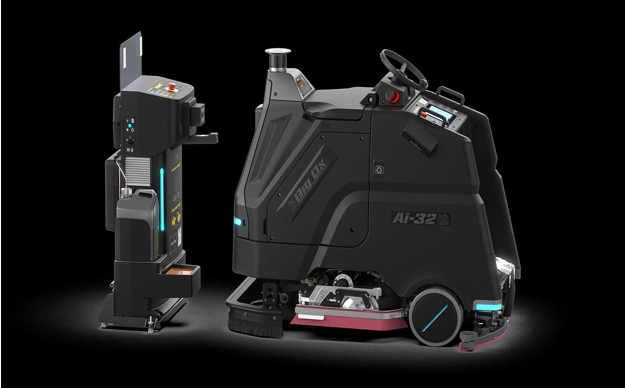
Warehouses are tough environments to keep clean. Between massive square footage, constant forklift traffic, packaging debris, and round-the-clock operations, traditional cleaning methods struggle to keep up. That’s why more facility managers are turning to the autonomous floor scrubber—a robotic floor scrubber that handles floor care on its own, without tying up your workforce or requiring a dedicated operator.
For warehouse managers, this isn’t just a nice-to-have. An industrial floor cleaning robot delivers consistent results shift after shift, reduces labor costs, and keeps operations running without interruption.
Why Traditional Warehouse Cleaning Falls Short
In most warehouses, floor cleaning is either handled manually with mops and walk-behind machines, delegated to employees who already have full-time responsibilities, or scheduled during off-hours that still require someone on-site to supervise. The result is predictable:
-
Inconsistent cleaning quality—some areas get scrubbed, others get skipped
-
Rising labor costs, especially on second and third shifts
-
Equipment downtime from machines that aren’t maintained properly
-
Safety risks from dirty or wet floors that don’t get addressed fast enough
Over time, these problems compound. What starts as a cleaning issue becomes a safety, compliance, and productivity problem.
What Makes an Autonomous Floor Scrubber Different?
An automatic floor scrubber machine is designed to clean without a human behind the wheel. Once you program a cleaning route, the machine navigates on its own—calculating efficient paths, avoiding obstacles, and covering large areas with minimal oversight.
In practice, that means:
-
Floors get cleaned during slow periods or overnight without staffing up
-
Your team stays focused on picking, packing, shipping—not pushing a scrubber
-
Cleaning happens on a consistent, repeatable schedule instead of “whenever we get to it”
Today’s robotic floor scrubbers use LiDAR, advanced sensors, and mapping technology to navigate complex environments—aisles, racking systems, loading docks, and everything in between. When something blocks the path, the machine reroutes and keeps working. No stopping, no waiting for help.
Built Specifically for Warehouse Environments
One of the biggest advantages of an autonomous floor scrubber for warehouses is that it’s engineered for the conditions your facility actually deals with:
-
Narrow aisles between racking and shelving
-
Heavy dust, cardboard scraps, shrink wrap, and packaging debris
-
Constant foot traffic and forklift movement
-
100,000+ square feet that need regular attention
Unlike general-purpose cleaning equipment, an industrial floor cleaning robot is purpose-built for these demands. Many models sweep and scrub in a single pass, eliminating the need for a separate pre-sweep and cutting your cleaning time significantly.
Cleaning Without Disrupting Operations
One of the most practical benefits of autonomous cleaning is that it doesn’t require you to shut anything down. Instead of scheduling cleaning around shift changes or shutting down aisles, you can:
-
Run machines overnight while the warehouse is quiet
-
Maintain clean floors during active shifts without pulling workers off the line
-
Address dust and debris buildup before it becomes a problem
Higher-end autonomous units can run extended cycles and return to a docking station on their own to recharge or refill water tanks, then resume cleaning—all without human intervention. For 24/7 distribution centers and manufacturing facilities, that’s a game-changer.
Reducing Labor Pressure and Costs
Labor is one of the biggest headaches in warehouse operations right now. Finding, training, and retaining cleaning staff—especially for night shifts—is expensive and unreliable.
An automatic floor scrubber machine directly addresses this by reducing the number of cleaning staff you need, freeing existing employees to focus on higher-value work, and eliminating the training curve that comes with operator-dependent equipment. The machine runs the same optimized route every time, so you get consistent results regardless of who’s on the clock.
Smarter Navigation, Fewer Disruptions
Early automated cleaning machines had a reputation for getting stuck or needing constant babysitting. That’s not the case anymore. Modern robotic floor scrubbers feature real-time obstacle detection, adaptive route planning, and machine learning that improves cleaning efficiency over time.
If a pallet or parked forklift blocks a path, the machine recalculates and keeps going. That level of reliability matters in high-traffic facilities where you can’t afford to have someone monitoring a cleaning machine around the clock.
The Long-Term Value for Warehouse Operations
Yes, autonomous cleaning equipment is a real investment upfront. But the long-term payoff is clear:
-
Significantly lower labor costs over the life of the machine
-
Consistent, documented cleaning results for compliance and audits
-
Reduced equipment wear because the machine operates within designed parameters—no operator abuse
-
Fewer slip-and-fall incidents from floors that actually get cleaned on schedule
For large warehouses and distribution centers where floor care is a daily necessity, these savings add up fast—often paying for the machine within the first couple of years.
The Bottom Line
Warehouse cleaning doesn’t have to be a labor-intensive headache. The autonomous floor scrubber represents a real shift in how facilities approach floor care—replacing inconsistent manual effort with reliable, automated performance. If you’re looking to cut cleaning costs, reduce your dependence on hard-to-find labor, and keep your floors consistently clean without constant supervision, it’s worth exploring what today’s industrial floor cleaning robots can do for your operation.