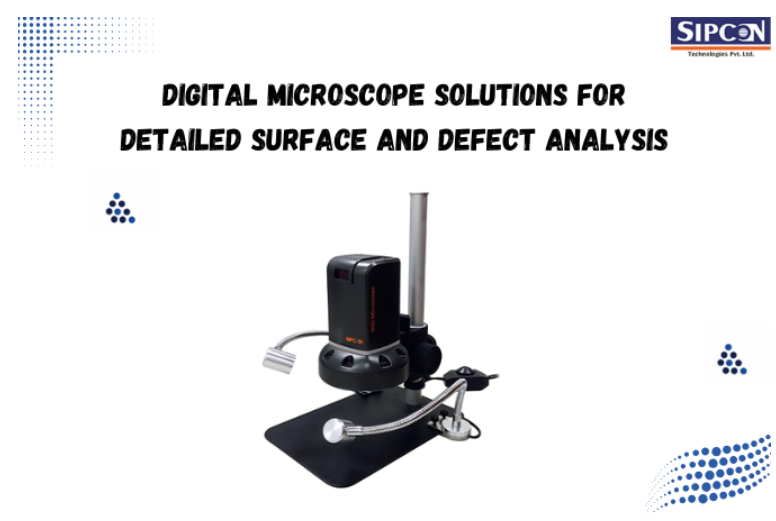
In the field of modern production and process control, it is critical for an organisation’s success that faults and surface imperfections are detected early on, to ensure both the product’s quality and brand integrity. With the continued miniaturization of materials and a narrow tolerance range of components, traditional quality inspection techniques are not always able to provide the necessary level of inspection required.
Here, Digital Microscopes offer a valuable tool to view, document, and analyse surfaces and imperfections (defects) at high levels of magnification. Additionally, the application of tools such as the Measuring Microscope will increase the accuracy of measurements taken when dimen src (i.e. dimensional evaluations are needed.
The Growing Need for Advanced Surface and Defect Analysis
Surface quality directly impacts the performance, durability, and safety of industrial products. Even minor defects such as scratches, cracks, burrs, or contamination can lead to functional failures, customer complaints, or regulatory issues. As a result, industries are increasingly adopting advanced inspection solutions to improve defect detection and analysis.
Before examining the benefits of a Digital Microscope, it is important to understand why surface inspection has become more demanding. Modern production processes involve complex materials, precision components, and strict quality standards. Visual inspection with the naked eye or basic optical tools is no longer sufficient. Digital and measuring microscopes provide the clarity and consistency needed to meet these evolving requirements.
High-Resolution Visualization for Accurate Defect Identification
One of the most significant advantages of using a Digital Microscope is its ability to deliver high-resolution, magnified images of surfaces and microstructures. This level of detail allows inspectors to identify defects that would otherwise remain unnoticed.
Unlike conventional microscopes, digital systems display images on screens, making it easier for teams to collaborate and review findings in real time. This visual clarity supports accurate defect classification, helping quality teams differentiate between cosmetic issues and critical flaws. When paired with a Measuring microscope, organizations can also correlate visual defects with precise measurements, strengthening inspection accuracy.
Consistent and Repeatable Inspection Results
Consistency is essential in quality control, particularly in large-scale production environments. Manual inspection methods can vary depending on operator experience, lighting conditions, or fatigue. Digital microscope solutions reduce this variability by providing standardized imaging and controlled inspection settings.
By using digital systems, organizations can ensure repeatable inspection results across shifts and locations. Measuring microscopes further enhance this consistency by enabling uniform measurement techniques. Together, these tools support reliable quality data, which is essential for audits, certifications, and continuous improvement initiatives.
Improved Documentation and Traceability
Effective documentation is a key requirement in regulated and quality-driven industries. A Digital Microscope allows users to capture, store, and annotate images of inspected surfaces and detected defects. This creates a visual record that can be referenced during audits, customer reviews, or internal investigations.
Before listing documentation benefits, it is important to recognize that traceability strengthens accountability. When defects are documented with clear images and measurements, root cause analysis becomes more accurate. Measuring microscope data adds quantitative support to visual evidence, enabling better tracking of trends and recurring issues over time.
Enhanced Decision-Making in Quality Control
Inspection data is only valuable if it supports informed decisions. Digital microscope solutions provide clear visual insights that help quality managers decide whether products meet acceptance criteria or require corrective action. This reduces ambiguity and speeds up decision-making on the production floor.
When combined with a Measuring microscope, organizations can base decisions on both visual and dimensional data. This integrated approach reduces the risk of passing defective components or rejecting acceptable ones. As a result, companies can balance quality assurance with production efficiency more effectively.
Increased Efficiency in Inspection Processes
Time efficiency is a major concern in high-volume manufacturing and testing environments. Digital microscopes streamline inspection by eliminating the need for constant manual adjustments and allowing quick image capture and analysis.
Before focusing on efficiency gains, it is important to note that faster inspection does not mean reduced accuracy. On the contrary, digital systems often improve accuracy while reducing inspection time. Measuring microscopes complement this by enabling quick dimensional checks without switching between multiple tools. This integrated workflow helps organizations maintain throughput without compromising quality.
Versatility Across Industries and Applications
Digital microscope solutions are widely used across industries such as electronics, automotive, medical devices, metalworking, and materials research. Their ability to adapt to different inspection requirements makes them a versatile investment.
Whether analyzing surface finish, identifying micro-cracks, or examining wear patterns, a Digital Microscope provides the flexibility needed for diverse applications. Measuring microscopes extend this versatility by supporting precision measurement tasks, making them suitable for both inspection and metrology-focused environments.
About Sipcon Instrument
Sipcon Instrument is a recognized provider of advanced inspection and measurement solutions for industrial and laboratory applications. The company offers a range of Digital Microscope and Measuring microscope systems designed to support accurate surface inspection, defect analysis, and dimensional evaluation. With a focus on precision, reliability, and user-friendly design, Sipcon Instrument helps organizations enhance their quality control processes and achieve consistent inspection outcomes.
Conclusion
Digital microscope solutions have become essential tools for detailed surface and defect analysis in today’s quality-driven industries. By delivering high-resolution visualization, consistent inspection results, and strong documentation capabilities, a Digital Microscope supports accurate defect detection and informed decision-making. When combined with a Measuring microscope, organizations gain a comprehensive inspection approach that improves efficiency and reliability.