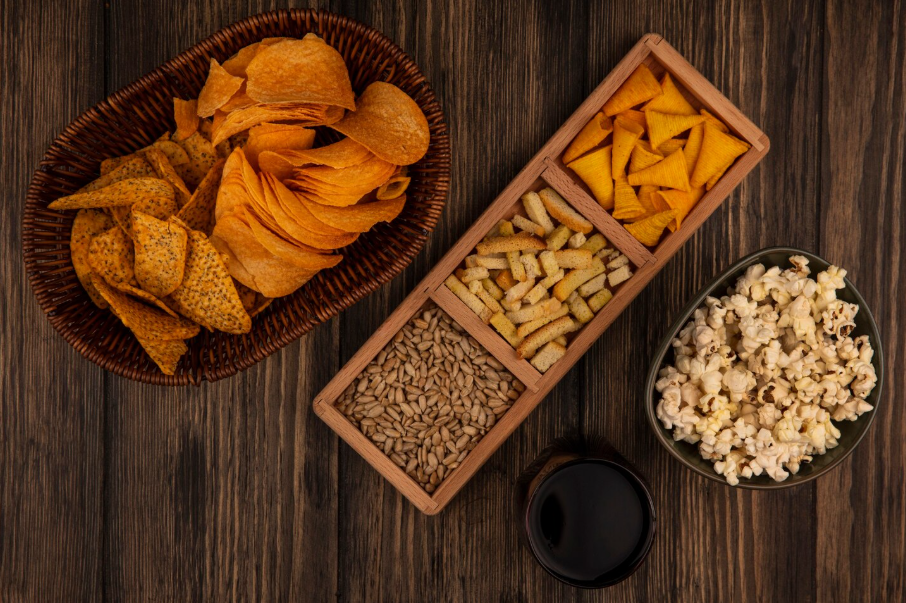
Chips and extruded snacks compete on freshness in a way few other packaged foods do, since a slightly stale or soggy pack is noticed immediately and rarely forgiven by a repeat buyer. As the category has grown more crowded with regional brands entering alongside national ones, shelf life protection has quietly become one of the clearer ways smaller manufacturers can compete on quality rather than just price.
Why Oil-Based Snacks Are Harder to Protect Than They Look
Fried and extruded snacks carry residual oil that oxidises over time, and that oxidation is what actually causes the stale taste long before a printed expiry date arrives. Packaging that does not address oxygen exposure directly is protecting the product from moisture and physical damage but doing very little for taste life, which means a manufacturer can be doing everything right on the barrier and structural side of packaging while still losing shelf life to a problem the packaging was never designed to solve.
Extruded snacks in particular, with their higher surface area and often more porous texture than a simple chip, can be even more susceptible to rapid oxidation and moisture uptake than manufacturers expect, especially in India’s humid coastal and monsoon-affected regions where ambient conditions work against shelf life from the moment a pack leaves the factory.
Where Manufacturers Lose Shelf Life Without Realising It
Inconsistent sealing across a production run is a common, invisible problem, since a seal that looks fine visually can still let in enough oxygen over weeks to noticeably shorten a product’s real shelf life compared to its printed date. A manufacturer running quality checks that only look at seal appearance, rather than actual seal integrity under pressure, can be shipping product with a real shelf life well short of what the label promises without ever detecting the gap internally.
Manual or under-calibrated gas flushing, when it is used at all, often does not achieve the oxygen displacement needed to meaningfully slow oxidation, which means the brand is paying for a shelf life feature that is not actually delivering full value. This is a particularly costly gap because it looks, on paper and in the production process, like the problem has already been solved.
The Regional Brand Competitive Angle
For regional snack brands specifically, shelf life inconsistency is a disadvantage that compounds over distance, since a product that travels further to reach smaller towns and rural retail spends more time in transit and storage before it reaches a shelf. A national brand with a shorter, more optimised distribution chain can sometimes tolerate a slightly weaker shelf life margin that would be genuinely damaging for a regional competitor covering the same distance with less logistics infrastructure behind it.
What a Properly Built Snack Packing Line Solves
Reliable gas flushing at the sealing stage, paired with consistent seal integrity across every pack, is what actually extends real shelf life rather than just the printed one. Packaging machine manufacturers like Arceus India build packing systems specifically suited to chips and extruded snack handling, and a properly specified chips packaging machine combines dependable sealing with effective gas flushing so shelf life protection is not left to chance on any individual pack, regardless of how far that pack ultimately has to travel before it is sold.
Export Ambitions Add a Longer Shelf Life Requirement Entirely
Chips and extruded snack manufacturers eyeing export markets face a shelf life requirement well beyond what domestic distribution demands, since export shipments spend significantly longer in transit and storage before reaching a retail shelf overseas. A packaging process barely adequate for domestic shelf life expectations is rarely sufficient for export, and manufacturers who discover this gap only after committing to an export order often find themselves needing an urgent packaging upgrade under deadline pressure rather than planning for it in advance.
Packaging Format Decisions Compound the Shelf Life Question
Beyond sealing and gas flushing, the packaging format itself plays a larger role in perceived freshness than many manufacturers credit. Flow wrap formats that hold their structural shape resist crushing better during transit and on crowded retail shelves, which matters directly for a product where visual damage reads to a customer as a freshness problem even when the seal itself was never compromised. A crushed but still properly sealed pack often gets blamed for staleness it does not actually have, simply because it no longer looks fresh on the shelf.
Manufacturers who evaluate packaging format alongside shelf life chemistry, rather than treating the two as separate decisions, tend to end up with a product that both tastes fresh for longer and looks fresh enough on the shelf to get picked up in the first place, which matters just as much for a snack brand competing on visual shelf presence against more established competitors.
For a category where taste on day thirty matters as much as taste on day one, the manufacturers investing in packaging that actually protects freshness are the ones building the kind of repeat purchase loyalty that price competition alone cannot buy, and that loyalty becomes an increasingly valuable asset as the snack shelf keeps getting more crowded every year.