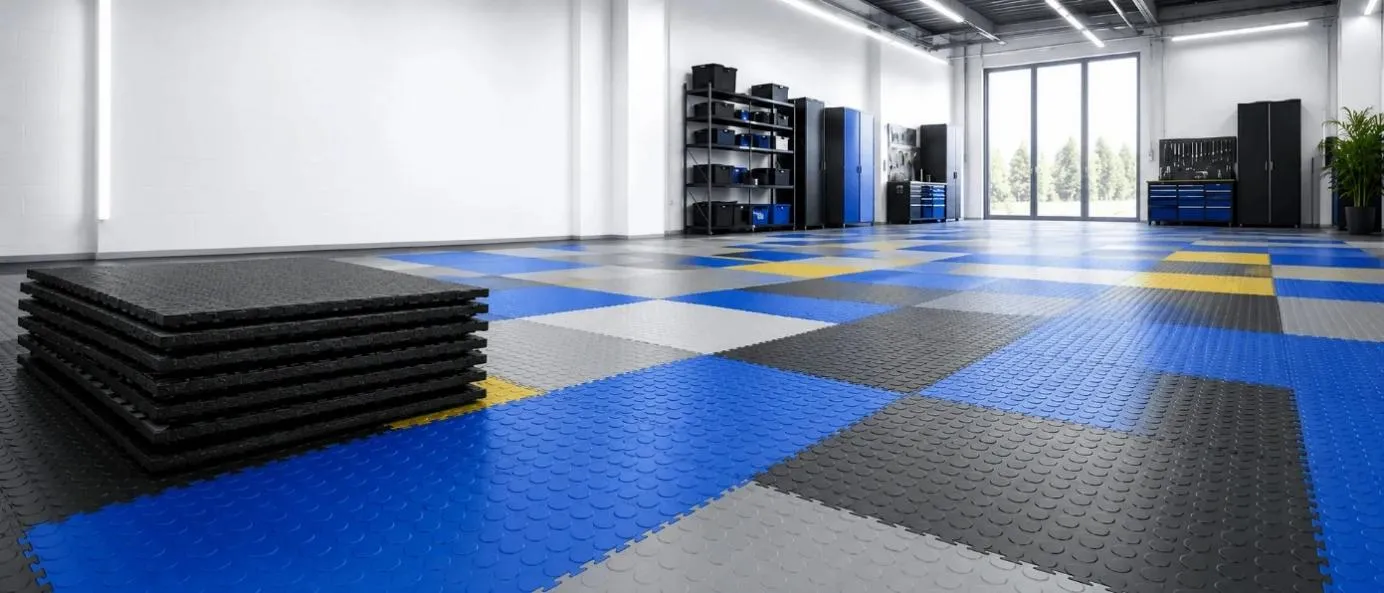
Walk through a garage at the end of a normal week, and the floor tells you quite a lot. There may be tyre marks near the entrance, grit brought in from outside, a few drops of water under the car and sawdust beside a workbench. Add a bicycle, tool cabinet and several storage boxes, and the floor is doing far more than simply providing something to walk on.
This is why choosing garage flooring by appearance alone can backfire. What looks smart in a photograph still has to cope with the way the room is actually used.
Empty a Section and Look Down
Old concrete tends to disappear from notice because people see it every day. Once the garage is partly emptied, however, cracks, rough patches and old stains become much easier to spot.
Not every mark is a serious problem. Still, loose concrete, significant cracking or signs of ongoing moisture deserve attention before another surface goes over the top.
Fixing a problem later is usually less convenient when storage cabinets, tools and a finished floor are already in place.
Think About What Happens on a Saturday
One garage may hold two cars and little else. Next door, the same-sized room might be used for woodworking, bicycle repairs and weekend DIY.
Those floors are not doing the same job.
Someone considering PVC Floor Tiles should start with those ordinary activities. Think about vehicle movement, work areas, storage and the things most likely to be dropped or spilt. Then check whether the particular flooring being considered is intended for those conditions.
There is no benefit in choosing a product for demands the room will never face.
Plan Around the Busy Parts
Wear is rarely distributed evenly across a garage.
The entrance gets repeated tyre and foot traffic. A workbench has somebody standing in front of it regularly. Heavy storage may remain untouched in another corner for years.
Recognising these zones can change the way a floor is planned. It also makes modular flooring interesting because the room is made up of individual sections rather than one uninterrupted surface.
If a particular area eventually needs attention, that distinction may prove useful.
Pay Attention to the Doorway
The middle of the garage is usually the easiest part. The entrance deserves more thought.
Rainwater, sand and dirt arrive here first. Cars cross the same strip repeatedly, and the new flooring has to meet the edge of the existing surface somewhere.
When looking at Interlocking Floor Tiles, check the manufacturer’s information about edges, installation and suitability for the intended application. Also make sure the completed floor will not interfere with door clearance or other moving components.
A neat centre cannot compensate for a badly planned entrance.
Measure Twice, Then Check Again
Garages have an inconvenient habit of not being perfectly square.
Measure the width and length at several points. Note steps, pillars, drains, fixed cupboards and anything else that interrupts the floor. Planning the tile layout before installation can reduce awkward cuts in highly visible areas.
It is also worth opening doors and moving the car through its usual position while thinking about the layout. A garage is a working room, not an empty rectangle.
Be Sensible About Cleaning
No garage floor remains spotless. That should not be the goal.
Regularly removing grit can prevent dirt from being ground across the surface. Spills should be addressed reasonably quickly, particularly when the substance involved could affect the flooring.
For deeper cleaning, follow the care instructions supplied for the specific material. A strong household chemical is not automatically appropriate simply because the floor happens to be in a garage.
Simple maintenance done occasionally is preferable to trying to rescue a neglected surface once a year.
Use the Flooring Job to Fix the Clutter
There is little satisfaction in installing a new floor and immediately covering it with the same chaotic pile of tools, boxes and unused equipment.
While the garage is partly empty, decide what genuinely needs to return. Put frequently used tools somewhere accessible. Move seasonal belongings into sensible storage and dispose of things that have been broken for years.
You may discover that better organisation changes the room almost as much as the flooring itself.
Conclusion
A garage floor does not need to impress visitors. It needs to survive the car coming home wet, a dropped spanner, dusty shoes and all the ordinary mess that appears between one weekend and the next.
That makes the starting question fairly simple: what actually happens in this garage? Once that is clear, material and layout choices become much easier to judge. Different modular flooring options for those comparisons can be explored through pvcfloortile.co.za.