In a surprising yet symbolic political moment, Zohran Mamdani, the 33-year-old politician of Indian-Ugandan descent, has become New York City’s youngest mayor in decades. His victory reflects more than just smart campaigning — it represents a deeper blend of cultural identity, storytelling, and popular media influence, especially his creative use of Bollywood and Amitabh Bachchan’s legacy to connect with voters across ethnic and generational lines.
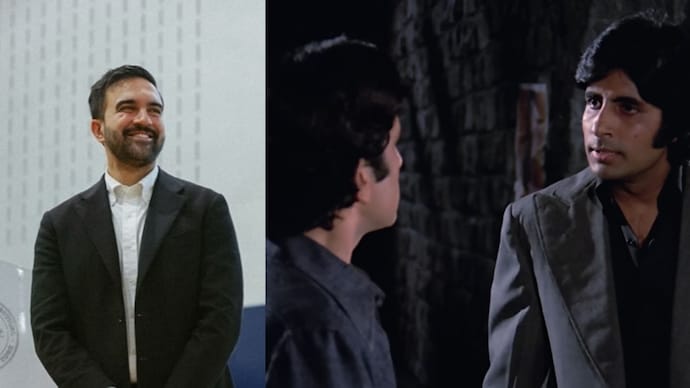
Mamdani’s campaign was not built on traditional politics alone; it was powered by emotion, relatability, and the universal appeal of cinema. His ability to fuse Bollywood nostalgia with New York’s urban struggles gave his message both heart and humor — something that resonated far beyond the South Asian diaspora.
1. Who is Zohran Mamdani?
Zohran Mamdani, born to a Ugandan mother and an Indian father, is no stranger to public service or cultural diversity. A member of the Democratic Socialists of America, Mamdani first gained attention as a state assemblyman representing Astoria, Queens, where he advocated for housing rights, education reform, and immigrant empowerment.
Educated in the US but deeply rooted in his Indian heritage, Mamdani often spoke about growing up watching Amitabh Bachchan films with his parents — particularly classics like Deewar, Sholay, and Zanjeer.
These films, he said, taught him “how to speak truth to power,” a value that became a guiding principle in his political journey.
LinkLaunches.com | WebsWisdoms.com | InfinityInspires.com
Excitedely.com | Survivores.com
2. The Bollywood Connect: A Campaign Built on Emotion
What made Mamdani’s campaign truly stand out was his strategic use of Bollywood themes, music, and dialogue to communicate complex political ideas in simple, emotional ways.
Instead of typical campaign slogans, his team used familiar Bollywood phrases reimagined for a political context. Posters carried lines like:
-
“Rishte mein hum New Yorker lagte hain… naam hai Mamdani!” (A twist on Amitabh’s iconic Don dialogue)
-
“Justice is the hero, corruption is the villain.”
These creative touches went viral on social media, particularly among young voters and immigrant families who found the campaign refreshingly relatable.
Bollywood, especially icons like Amitabh Bachchan, has long represented rebellion, justice, and social equity — the same issues Mamdani’s campaign championed. By weaving these references into his narrative, he turned his campaign into a cultural movement rather than just a political one.
3. The Amitabh Bachchan Effect
Amitabh Bachchan, often called India’s “Angry Young Man,” revolutionized Indian cinema by portraying characters who stood up against injustice and systemic inequality. These themes are timeless — and they found new life in Mamdani’s campaign for New York’s working class.
During rallies, Mamdani frequently quoted or referenced Amitabh’s films. At one campaign event, he said:
“When Amitabh stood on screen and said ‘Main aaj bhi phenke hue paise nahi uthata,’ he was rejecting disrespect. That’s what every underpaid worker and every ignored community deserves — dignity.”
The crowd cheered, not just because it was witty, but because it connected to something deeper — a shared sense of struggle and pride.
By using cinema as a language of solidarity, Mamdani reached beyond traditional political barriers. His speeches, peppered with Hindi words and film analogies, turned into viral clips on TikTok and Instagram, sparking conversations across communities — from South Asians to Latinos to African Americans.
4. A Bridge Between Cultures
Mamdani’s win is also a testament to how cultural representation shapes modern politics. New York City, home to over 800,000 South Asians, has often seen immigrants contribute economically but remain underrepresented politically.
By celebrating his heritage openly — not as an outsider’s story but as an integral part of the American fabric — Mamdani appealed to both immigrants and long-time New Yorkers who value diversity.
His campaign balanced local issues like affordable housing, transport reform, and workers’ rights with global empathy, inspired by the multicultural values he grew up with.
As one of his campaign volunteers put it:
“Zohran didn’t just speak English or Hindi — he spoke the language of hope.”
5. Digital Campaigning with Bollywood Style
Mamdani’s campaign was a digital masterclass. His team produced short videos inspired by Bollywood trailers, complete with dramatic music, emotional storytelling, and punchy lines.
One viral ad opened with the text: “In a city where inequality reigns, one man refuses to stay silent…” followed by snippets of Mamdani speaking to workers, tenants, and students — styled like a movie montage.
This creative presentation made politics exciting, especially for young voters who consume most of their content online. It blurred the lines between entertainment and activism — a formula that worked brilliantly in a city known for its media-savvy audience.
6. A Victory Rooted in Identity and Inclusion
Mamdani’s election is not just a personal win but a symbolic breakthrough for Indian-origin and African-origin communities. It shows how a hybrid cultural identity can be a strength in politics, not a barrier.
His victory also echoes a global trend — where leaders are embracing cultural storytelling as a way to connect with people in an era of short attention spans and fragmented identities.
For many Indian Americans, Mamdani’s success feels personal. It’s not just about an immigrant’s child making it big; it’s about seeing elements of their shared cultural history — from Bollywood to community values — reflected in the public sphere.
7. The Challenges Ahead
While Mamdani’s victory speech was filled with optimism, he faces significant challenges. New York City continues to struggle with:
-
Rising rents and housing shortages
-
Public transit funding issues
-
Homelessness and unemployment
-
Tensions between progressives and traditional power groups
Mamdani’s ability to convert his cultural charisma into concrete policy results will determine his long-term success. Political observers note that while cultural appeal can win elections, governance demands pragmatism and collaboration.
Still, his track record in the State Assembly — particularly his advocacy for rent stabilization and renewable energy — gives hope that his leadership will combine ideals with impact.
8. Bollywood Beyond Borders
Mamdani’s story also highlights Bollywood’s growing global influence. From London to Los Angeles, Indian cinema has become a cultural bridge connecting diasporas worldwide.
By referencing Amitabh Bachchan — a universally recognized figure — Mamdani tapped into something timeless. Bachchan’s screen persona, defined by resilience, justice, and self-respect, transcends nationality.
It’s remarkable that decades after films like Deewar and Zanjeer, their messages still resonate — this time in New York’s city politics.
9. Lessons for Modern Politics
Mamdani’s campaign teaches modern politicians an important lesson: authenticity wins hearts. In an era dominated by social media and information overload, voters crave leaders who are genuine, creative, and rooted in something real.
By turning his love for Bollywood into a symbol of unity, Mamdani didn’t just campaign — he told a story that people wanted to be part of.
As one of his supporters tweeted:
“Only Zohran could make housing policy sound like a Bollywood script — and still make it make sense.”
Conclusion: The Power of Storytelling in Politics
Zohran Mamdani’s rise to the mayor’s office is a testament to the power of cultural storytelling in shaping modern democracy. His victory shows that identity and art can coexist with policy and governance — and that emotional connection is just as powerful as political strategy.
In many ways, his journey mirrors that of Amitabh Bachchan’s cinematic heroes — standing tall against the odds, guided by conviction, and driven by empathy.
If politics is the stage and society the audience, then Mamdani’s win proves one thing: when you mix vision with culture, the story writes itself — and the crowd always cheers.