Global supply chains are intricate networks that power modern production and commerce. From sourcing raw materials to delivering finished products, these systems rely on seamless coordination. When disruptions occur, the ripple effects are felt worldwide, as was recently demonstrated by a significant supply chain crisis. Here’s a look at the underlying causes and the strategies companies are employing to recover.
The crisis was triggered by a convergence of factors, including volatile shifts in supply and demand. Initial declines in production were met with widespread layoffs and workplace restrictions, creating labor shortages across manufacturing and transportation sectors. These limitations compounded when demand rebounded, leaving many businesses unable to keep pace with new consumer expectations.
One of the most pressing challenges has been the shortage of qualified workers across the supply chain. This labor gap has disrupted manufacturing output, delayed shipments, and created bottlenecks in delivery networks.
To address these challenges, organizations are focusing on workforce development and adopting innovative strategies. Increased hiring efforts, enhanced training programs, and partnerships with educational institutions are being prioritized to rebuild the talent pipeline.
Simultaneously, companies are redesigning supply chains to increase resilience. Investments in analytics technology are helping organizations gain better visibility and predict potential disruptions. On-shoring manufacturing operations is also being explored to reduce dependence on global transportation networks and mitigate delays.
Automation is another key aspect of recovery efforts. Advanced systems are streamlining production processes, reducing reliance on manual labor, and enabling more efficient operations. Preventative maintenance programs are being implemented to keep equipment running smoothly and avoid downtime.
Recovery from a supply chain crisis is a complex and evolving process. By embracing innovation, improving labor strategies, and rethinking operational models, businesses are laying the groundwork for more robust and adaptable supply chains.
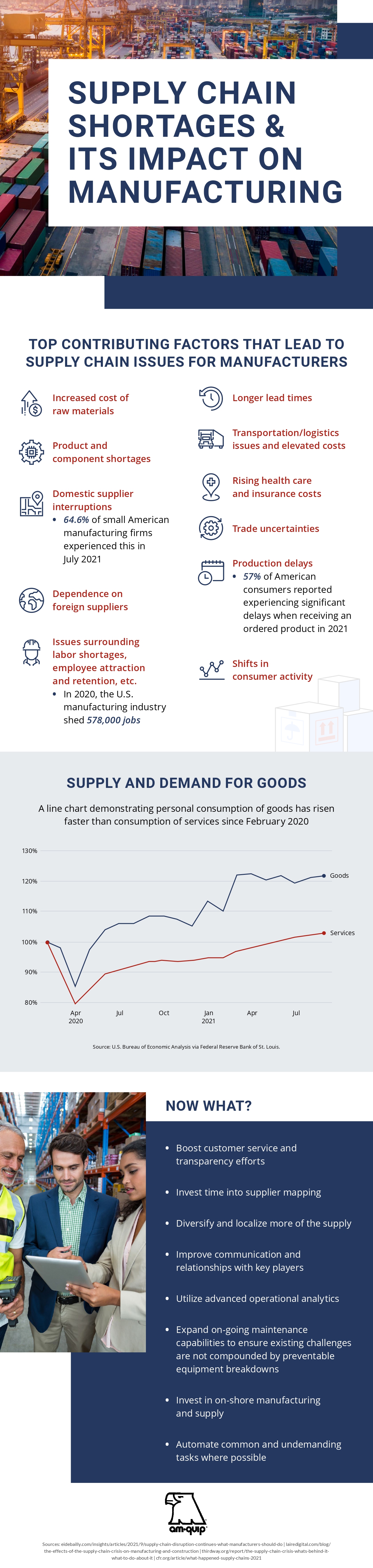
To learn more about how supply chain recovery strategies, continue reading on to the infographic accompanying this post, courtesy of American Equipment, a crane repair company.